
Garage Door Cable Replacement in New York — What It Actually Costs and Why Most “Quick Fixes” Fail Within Two Months
A snapped or frayed garage door cable in New York typically runs $155–$295 to replace properly, and most same-day jobs finish in under two hours. Call (888) 402-9497 for a free estimate — Joseph Taylor shows up personally to diagnose whether your cable failed on its own or whether something else is about to break next.
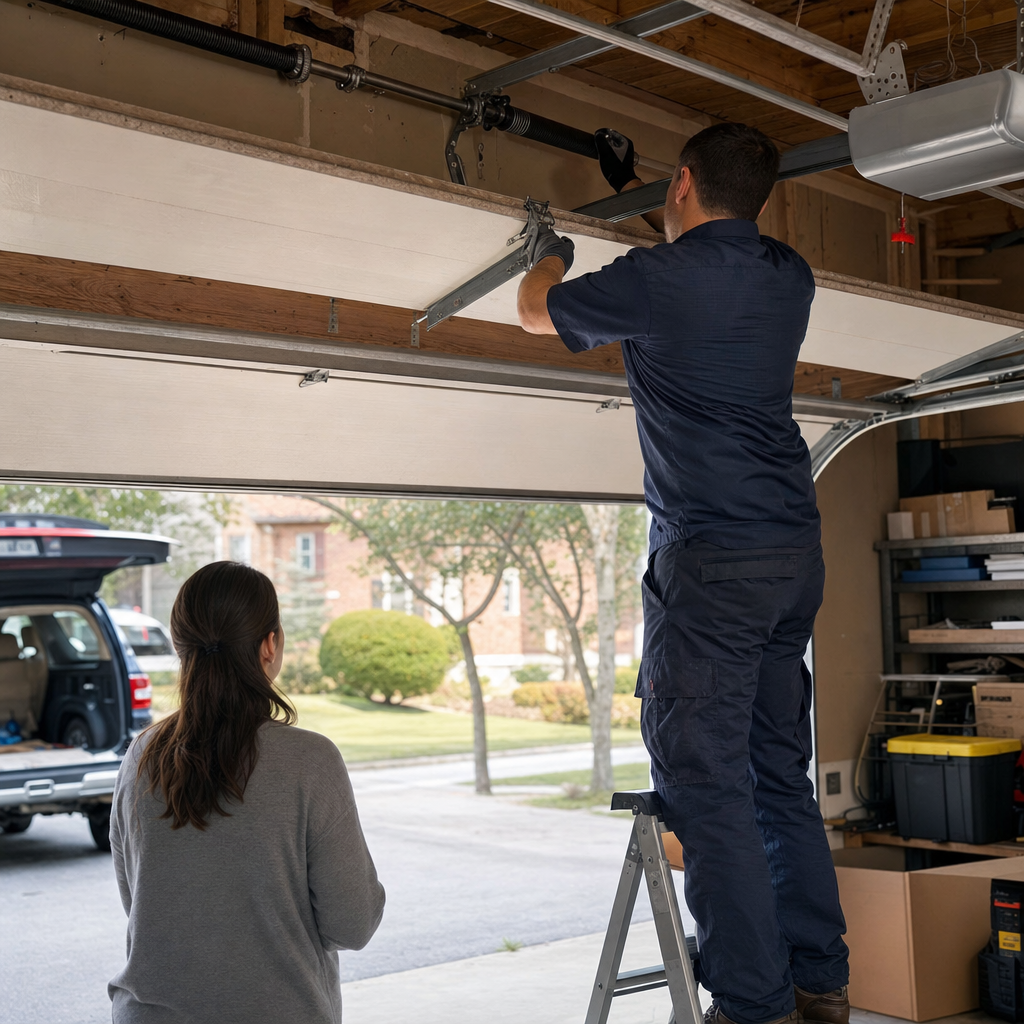
We’ve lost count of how many cable “repairs” we’ve been called to redo across the five boroughs. A homeowner in Bay Ridge pays $180 for a new cable, six weeks later it’s frayed again, and the second tech finally notices the drum is grooved like a vinyl record. That’s not a cable problem — that was a diagnostic problem from the start. If a tech quotes you cable replacement in under five minutes over the phone without asking about your door weight, spring type, or how the failure happened — that’s a flag. Joseph has re-done enough of those “cable jobs” to say so plainly.
Why Cables Fail Faster in New York Than Almost Anywhere Else
New York’s geography punishes garage door hardware in ways inland climates don’t. Salt air from the harbor pushes deep into coastal neighborhoods — we’ve seen accelerated cable corrosion in Bay Ridge, Rockaway, South Beach on Staten Island, and anywhere within a few blocks of the water. The steel cables absorb atmospheric salt, the humidity never fully dries them out, and the internal strands start rusting from the inside before you see external fraying.
Basement garages in pre-war buildings throughout Manhattan and brownstone Brooklyn face a different strain: year-round humidity with zero airflow. We’ve pulled cables from Park Slope basement doors where the interior strands had turned to orange dust while the outside looked merely “worn.” The cable didn’t snap — it dissolved.
Then there’s the load factor. New York’s housing stock skews older and heavier. A 16-foot Clopay or Amarr door in a Queens detached home might weigh 180 pounds. The same dimension in a 1920s Bronx brick garage with original wood-core paneling? Could be 250 pounds or more. Heavier doors cycle the same cable through more stress per open-close. More stress means faster fatigue. A tech who doesn’t weigh or measure your door before spec’ing replacement cable is guessing with your money.
Here’s what we check before touching a cable:
- Door weight and spring balance — an unbalanced door overloads one cable
- Drum groove condition — worn drums chew through new cables in months
- Bottom bracket wear — loose or cracked brackets let cables saw against metal edges
- Cable drum alignment — misaligned drums create uneven tension and premature fraying
- Environmental exposure — salt air, humidity, or chemical exposure changes material spec
The Diagnostic Joseph Runs Before Touching Anything
Joseph Taylor grew up in Woodside, Queens, about a mile from the elevated 7 train, in a neighborhood where everybody knew the guy who fixed things and nobody wasted money on problems they could solve themselves. That background shows in how he approaches a cable call. He doesn’t start with the cable. He starts with the door.
First, he releases the opener and lifts the door manually to the halfway point. A properly balanced door stays put. If it crashes down or rockets up, the spring tension is wrong — and that wrong tension is what killed your cable. Replace the cable without fixing the balance and you’re funding his next visit.
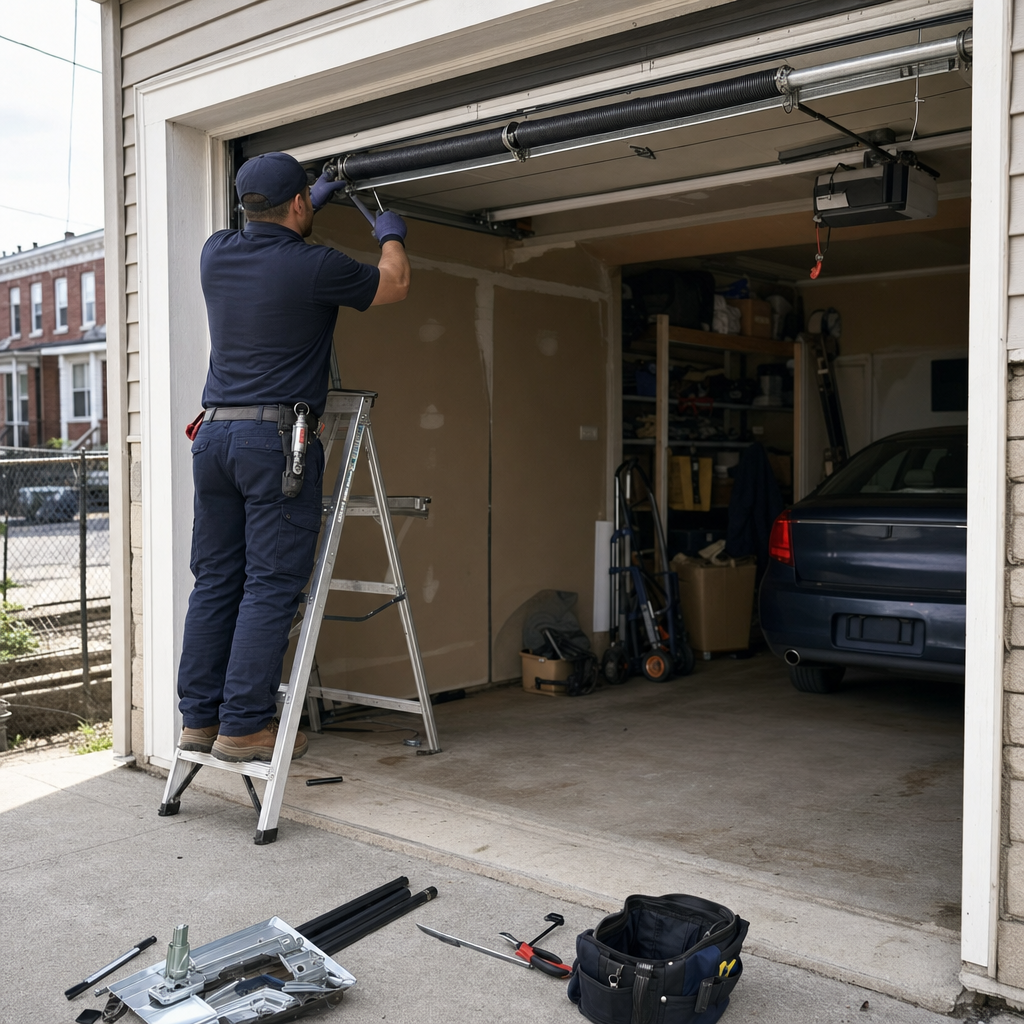
Next, he inspects the cable drum grooves with a flashlight and fingertip. Smooth, consistent grooves mean the cable tracks true. Grooves that feel like corrugated cardboard mean the drum has been grinding steel against steel. New cable on a worn drum lasts maybe three months in heavy-use New York conditions. We’ve seen it repeatedly in Rockaway beach houses where the salt accelerates everything.
Bottom brackets get the same scrutiny. A cracked or loose bracket lets the cable angle shift slightly with every cycle. That slight angle becomes a sawing motion. The cable doesn’t fail dramatically — it frays at the loop end, strand by strand, until one Tuesday morning it lets go while you’re rushing to beat traffic.
Only after this sequence does Joseph spec the replacement cable. And “spec” is the operative word — not “grab whatever garage door parts happen to be on the truck.”
Galvanized vs. Stainless: The Material Choice Most Techs Never Mention
Standard galvanized aircraft cable is what most installers carry. It’s fine for dry, inland installations. In New York’s coastal zones and humid basement garages, it’s a compromise.
Stainless steel cable costs roughly 30–40% more upfront but resists the salt and moisture that destroy galvanized strands, making it among the best garage door parts in New York, NY for coastal conditions. For a Rockaway homeowner whose garage faces the Atlantic, or a Red Hook resident three blocks from the harbor, stainless isn’t an upsell — it’s the correct specification. Joseph carries both and will tell you straight which your installation actually needs. He’s not interested in selling you the expensive option for margin; he’s interested in not hearing from you again until you need a different door entirely.
The diameter matters too. Most residential doors use 1/8-inch or 3/32-inch cable, but heavier Clopay or Amarr wood-core doors need 5/32-inch. Too thin and it fatigues faster. Too thick and it won’t seat properly in the drum grooves, causing its own wear pattern. This is where the “works on your brand” knowledge matters — Joseph specs cable by door weight, drum geometry, and environmental exposure, not by “whatever fits most.”
What New York Cable Replacement Actually Costs
Here’s the line-item pricing we use across all five boroughs. These ranges reflect actual 2024–2025 New York market rates for owner-operator service with proper diagnosis and warranty-backed installation:
| Service | Price Range |
|---|---|
| Cable Repair / Replacement (single) | $155 – $295 |
| Cable Pair Replacement (both sides) | $245 – $450 |
| Cable + Drum Replacement (if grooved) | $340 – $580 |
| Cable + Bottom Bracket Replacement | $295 – $495 |
| Spring Repair (if balance is off) | $210 – $400 |
| Track Realignment (if cable jumped) | $140 – $285 |
Single cable replacement at the low end assumes standard galvanized cable, accessible hardware, and no secondary issues. The high end covers stainless cable spec, paired replacement (which we usually recommend — if one cable failed from age, the other’s not far behind), and any drum or bracket work discovered during diagnosis.
We don’t quote over the phone without seeing the door. Anyone who does is either guessing or planning to upsell you on arrival. Joseph’s approach: “Tell me what it’s doing — or not doing — and I’ll tell you what it needs.” Then he shows up, looks at the actual hardware, and gives you a number that doesn’t change.
Common Scenarios We See Across New York Neighborhoods
The Queens attached garage with a door that “sounds like a gunshot.” Usually a cable snap under tension, often at 6:47 AM when someone’s leaving for the LIRR. The door jams crooked in the tracks, half-open, car trapped inside. These are emergency calls we prioritize — but even rushing, Joseph still checks the drum and spring balance before installing the new cable. In Astoria and Long Island City, we’ve found that rapid temperature swings between steam-heated garage interiors and January exterior cold create extra contraction stress on already-fatigued cables.
The Brooklyn brownstone basement door that “just got heavier.” Homeowner in Park Slope or Crown Heights notices they’re manually lifting more weight. One cable has frayed enough to stretch, throwing the door off balance. The opener strains, the rail flexes, and if ignored, the opener gear strips next. We catch these before the secondary damage — but only if the homeowner calls when they first notice the heaviness, not when the cable finally gives.
The Staten Island coastal installation that needs cable every 18 months. South Beach, Midland Beach, anywhere within sniffing distance of the Arthur Kill or Lower Bay. Standard galvanized cable simply doesn’t survive here. Joseph switches these installations to stainless and often upgrades to a slightly heavier spec. The upfront cost runs higher; the three-year reliability is the actual savings.
The Manhattan high-rise parking garage with commercial-grade hardware. Different animal entirely — heavier doors, more cycles per day, different drum systems. Joseph’s 17 years includes plenty of commercial work, and the brand knowledge across Chamberlain, Genie, and industrial LiftMaster openers means he can source and install cable for systems most residential techs won’t touch.
Why This Is Not a DIY Repair
A garage door cable under load carries the full tension of the counterbalance system — often 100 to 150 pounds of force, sometimes more on heavier New York doors. “Under load” means the spring is still wound and the door is in any position other than fully open with the spring fully relaxed. A frayed cable can snap without warning. A cable being “adjusted” by someone without proper winding bars and training can release that stored energy through their hands, face, or torso.
We’ve seen the aftermath. A homeowner in the Bronx tried to re-hook a slipped cable with the door partially open. The cable caught, the spring torque transferred, and he took a metal bracket to the forehead. Required stitches and a new door anyway because the impact bent the track.
Joseph doesn’t share this to scare you. He shares it because “how to replace a garage door cable” videos exist, and they’re made by people who’ve never felt a cable snap against a concrete wall hard enough to chip the surface. The actual repair requires releasing spring tension safely, matching cable length precisely, re-tensioning evenly, and verifying balance — all with tools and knowledge that don’t come from a ten-minute tutorial. This is trained professional work. We’re state-licensed, insured & bonded, and we’ve been doing it without injury incidents for 17 years because we respect what these components can do.
How to Tell If Your “Cable Guy” Is Actually Fixing the Problem
After 411 verified reviews from New York homeowners, we’ve heard enough second-opinion stories to spot patterns. Here’s what separates a proper repair from a band-aid:
- They ask about the failure — sudden snap or gradual fraying? Sudden suggests impact or spring issue; gradual suggests wear, corrosion, or alignment problem.
- They check both sides — even if only one cable failed, the other experienced the same cycles and environment.
- They inspect the drum with light and touch — not a glance from three feet away.
- They test door balance after installation — manual lift to halfway, door should stay.
- They explain what they found — not just “it was worn” but “the drum groove was catching the cable at this angle.”
If your tech does none of these and still charges you, you didn’t get a cable replacement — you got a cable installation, possibly setting up the next failure. Joseph’s re-done enough of these to recognize the pattern immediately.
From a Broken Cable to a Full New Door
Sometimes the cable failure reveals broader systemic wear. A 1970s door in a Queens colonial with original hardware, rotting bottom sections, and obsolete track geometry? Cables are the symptom. The economics tilt toward replacement. Joseph will tell you straight — he’s not interested in pumping parts into a door that’s structurally finished.
When replacement makes sense, Matrix handles the full scope: door selection, Garage Door Parts in New York, installation, opener integration if needed. No calling a second contractor, no sourcing hardware from a third party who may or may not have the right bracket for your Amarr or Wayne Dalton model. From a broken spring to a full new door, one company, one accountability chain.
Our home page has more on our full service scope, but for cable work specifically, the point is this: we’re not trying to sell you more than you need, and we’re not going to patch a cable on a door that’s genuinely done.
FAQs
Garage door cable replacement in New York typically costs $155–$295 for a single cable and $245–$450 for both cables, with paired replacement usually recommended since matched cables wear evenly. Call (888) 402-9497 for an exact quote — estimates are free and Joseph shows up personally to assess your specific door.
Yes, same-day cable replacement is available for urgent situations, and most standard jobs finish in under two hours once we’re on site. We carry cable inventory across 8 major brands including Chamberlain and Genie systems, so we’re not ordering parts while your car sits trapped. Call (888) 402-9497 — we’ll confirm timing based on your location.
Repairing a cable — meaning reattaching or splicing — is almost never safe or code-compliant; proper cable replacement is the only reliable option and runs $155–$295. If the cable failure revealed worn drums, bad spring balance, or bottom bracket damage, addressing those together with proper garage door roller replacement in New York, NY when needed prevents the repeat failure that costs more long-term. Joseph will walk you through what’s actually needed versus what’s optional.
Visible fraying, rust, or a snapped strand means the cable needs replacement, but the critical question is why it failed — worn drums, bad spring balance, or corroded bottom brackets will destroy the new cable too. That’s why Joseph checks drum condition, spring tension, and bracket integrity before installing anything. If your door feels heavier, opens crooked, or makes grinding sounds, call (888) 402-9497 — those symptoms often predict cable failure before it happens.
Ready to Get This Fixed Right?
Joseph Taylor shows up personally, diagnoses the actual problem, and installs cable that holds up through a New York winter — whether you’re in a humid basement garage in Brooklyn or a salt-air exposed door in the Rockaways. No subcontractor roulette, no “I’ll have to order that” delays, no repeat visits for the same failure. Call (888) 402-9497 for a free estimate and same-day availability.
Written by Joseph Taylor, Owner & Lead Technician at Matrix Garage Door Repair New York, serving New York, NY.