
Garage Door Spring Replacement Cost in New York: What You’ll Actually Pay — and What’s Often Added On
Garage door spring replacement in New York typically runs $210–$400 for a standard single torsion spring, but we’ve seen Brooklyn and Queens homeowners quoted $600–$800 for “necessary” dual-spring upgrades that their door never needed. Call (888) 402-9497 for a free, itemized estimate — Joseph Taylor shows up personally, diagnoses the actual configuration, and quotes before any work starts.
Most garages in Brooklyn brownstones and Queens attached homes were built with single torsion spring setups in the 1970s and 80s. A lot of techs quote dual replacement automatically. Sometimes that’s right. Sometimes it isn’t. After 17 years of opening up doors across all five boroughs, we’ve learned that the fastest way to overpay is to not know what your door actually came with — and what it actually needs.
Why NYC Spring Costs Vary: Single vs. Dual vs. Extension
Spring replacement pricing isn’t mysterious, but it’s rarely itemized clearly. Here’s what drives the real cost difference in New York’s housing stock:
| Spring Type | Typical NYC Cost Range | Common In |
|---|---|---|
| Single torsion spring | $210–$340 | Pre-war row houses, 1970s–80s attached homes, light steel doors |
| Dual torsion spring (pair) | $340–$550 | Postwar detached homes, solid-wood carriage doors, heavy insulated doors |
| Extension spring system | $175–$295 | Older Staten Island bungalows, low-headroom setups, pre-1960 builds |
| High-cycle upgrade (50,000 cycles) | Add $80–$150 | Doors used 4+ times daily, commercial-adjacent properties |
The labor component in New York runs higher than national averages — tighter access, parking constraints, and the simple reality that hauling a 150-pound door in a Manhattan garage or a Queens basement stairwell takes longer than a suburban driveway job. We don’t pad for that; we quote it upfront.
Joseph Taylor grew up in Woodside, Queens, about a mile from the elevated 7 train, in a neighborhood where everybody knew the guy who fixed things and nobody wasted money on problems they could solve themselves. That background is why we’re explicit about this: the most common overcharge we see is dual-spring replacement on doors that only ever had one. A second spring adds parts cost, labor time, and profit margin — and if your door was engineered for a single, you’re paying for complexity you don’t need.
Which NYC Homes Need What: A Quick Self-Check
Before any tech arrives, you can sanity-check the quote. Here’s what 17 years of garage door problems solved across New York’s housing stock tells us:
- Pre-war row houses (Park Slope, Bed-Stuy, Washington Heights): Usually single torsion spring, often original or replaced once. Door weight is moderate — solid wood panels, but not carriage-style thickness. If you’re being quoted dual springs, ask specifically why the load calculation changed.
- Postwar detached homes (Bayside, Fresh Meadows, Staten Island mid-island): More likely dual torsion, especially if you have a wide two-car opening or an insulated steel door. These doors are heavier and the spring pair shares load evenly.
- Modern condo garages (Long Island City, Downtown Brooklyn, Hudson Yards area): Often commercial-grade hardware with high-cycle springs from the start. These need brand-matched replacement — we’ve worked on LiftMaster and Chamberlain opener-integrated systems where the spring spec is tied to the opener torque settings.
- Extension spring remnants (older Staten Island, parts of the Bronx): If you see springs running parallel to the horizontal tracks, not above the door on a metal shaft, that’s extension. They’re less common now, but we still replace them — and they’re cheaper, but never try adjusting them yourself. The stored energy is lethal.
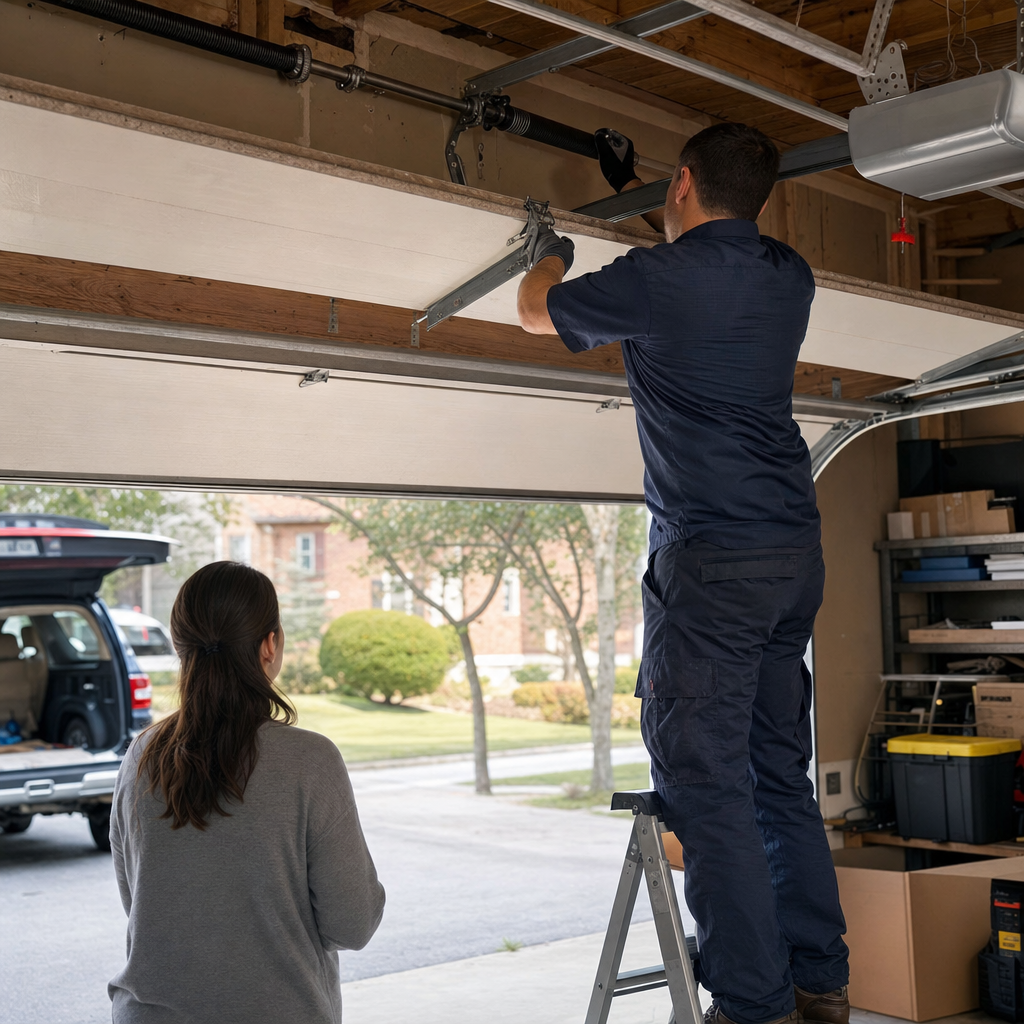
Here’s your self-check: look above the closed door. See one spring on a metal tube? That’s single torsion. See two, wound in opposite directions? That’s dual. See springs stretching along the sides? That’s extension. Snap a photo before calling — we’ll confirm over the phone, and you’ll know if the arriving quote matches what you have.
The “Replacement in Kind” Trap: Cycle Ratings and Door Weight
A spring isn’t just a spring. Every torsion spring is rated for a specific cycle count — how many open/close operations before metal fatigue sets in. Standard springs are 10,000-cycle. High-cycle springs run 25,000 to 50,000.
The trap works like this: a heavy solid-wood carriage door, common in renovated Brooklyn brownstones and parts of Riverdale, needs a spring matched to its weight. Install a cheap 10,000-cycle spring rated for a lighter door, and it works — for about 18 months. Then you’re paying for replacement again, plus the service call you thought you’d avoided.
We’ve replaced springs on Craftsman and Raynor systems where the previous installer dropped in a generic 10,000-cycle unit to hit a price point. The homeowner saved $60 upfront and paid $280 again two years later. In New York, where parking a service van legally for an hour can cost $25 in meter fees alone, that false economy hurts twice.
Joseph’s standard: we match spring cycle rating to door weight and usage pattern. For a door that sees 6–8 cycles daily — typical for a family with two drivers and a home gym in the garage — we’ll recommend the 25,000-cycle upgrade. It pays back on the second avoided replacement.
Safety: Why This Isn’t a Weekend Project
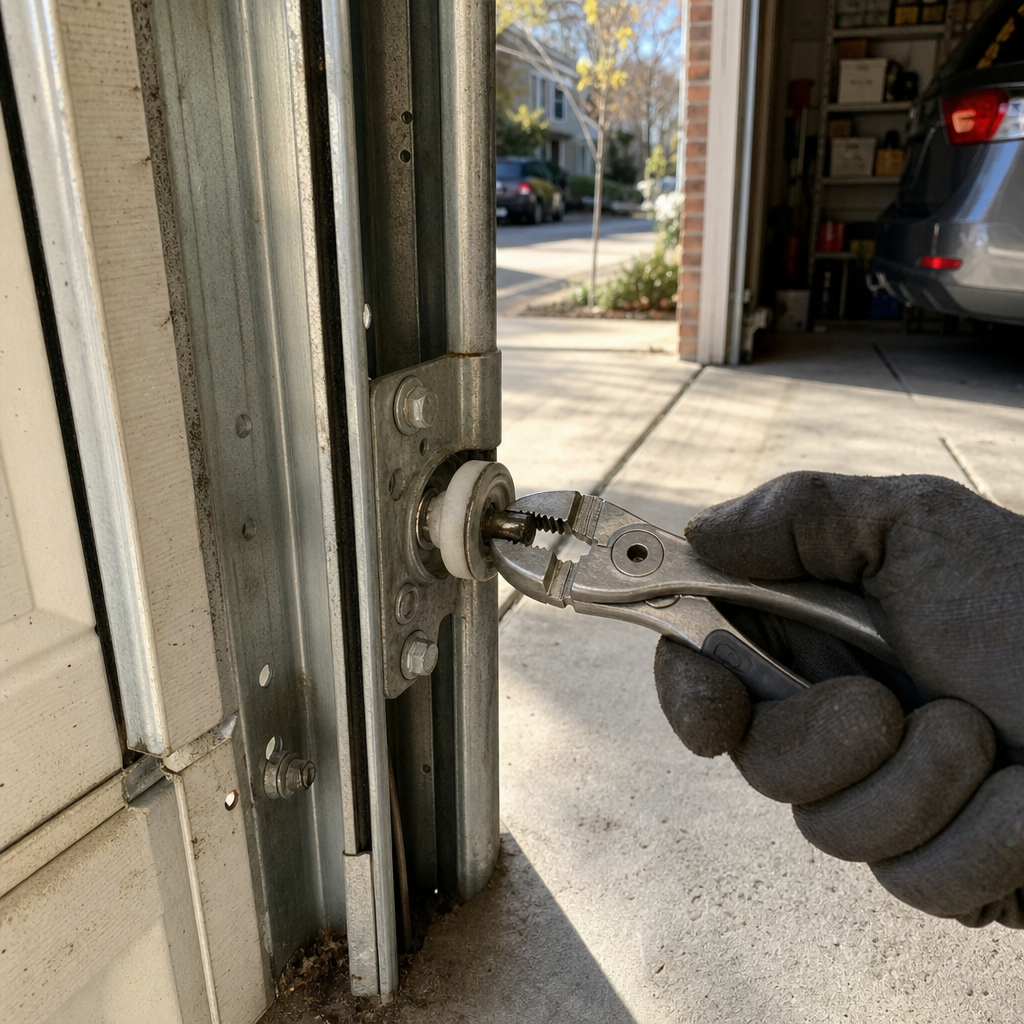
Torsion springs store massive mechanical energy — enough to lift a 200-pound door, which means enough to cause serious injury if that energy releases unpredictably. The winding bars used to tension a torsion spring can slip, and the recoil force has broken wrists, fingers, and worse.
We don’t provide step-by-step DIY instructions for spring replacement because we’ve seen the emergency room outcomes. If your spring is broken, the door is extremely heavy and unbalanced. If it’s still intact but making noise, it’s under tension and unpredictable. Call a trained professional. Our Garage Door Repair service includes full spring and cable work, and Joseph Taylor handles the high-tension components personally.
What you can safely check: whether the door lifts manually with the opener disconnected (it shouldn’t feel like dead weight), whether the cables are frayed or off the drums, and whether the spring shows a visible gap in the coils — all clues to Why Does my Garage Door Reverse? (New York, NY) Report what you see — “Tell me what it’s doing — or not doing — and I’ll tell you what it needs.”
What Matrix Garage Door Repair New York Does Differently
Most garage door companies in New York operate on a dispatch model: a sales tech quotes, a separate install crew executes, and neither is accountable to the other. The upsell happens in the handoff.
We’re owner-operated. Joseph Taylor is the Owner AND Lead Technician. He quotes the job, brings the parts, and does the work. That matters for spring replacement specifically because:
- No configuration bait-and-switch: The person who sees your door on arrival is the person who priced it. If it’s genuinely dual-spring, you’ll know why before any work starts.
- Brand-matched parts: We stock and service eight major brands — LiftMaster, Chamberlain, Genie, Clopay, Amarr, Wayne Dalton, Craftsman, and Raynor — so your spring replacement integrates with existing opener torque settings and safety sensors.
- 411 neighbors have trusted us: That’s 411 verified customer reviews at a 4.8 average, built one spring replacement at a time across Manhattan, Brooklyn, Queens, the Bronx, and Staten Island.
- Emergency response when you need it: A broken spring with a car trapped inside at 6 a.m. isn’t a “next available appointment” situation. We offer emergency garage door repair for exactly these failures.
From a broken spring to a full new door, we handle the scope — no sourcing parts from a third party, no calling a second contractor.
FAQs
Single torsion spring replacement in New York typically costs $210–$340, dual torsion spring replacement runs $340–$550, and extension spring systems fall in the $175–$295 range. Call (888) 402-9497 for an exact quote — estimates are free, and Joseph Taylor shows up personally to confirm your door’s actual configuration.
A broken torsion or extension spring must be replaced — it cannot be repaired. The only “repair vs. replace” decision is whether to upgrade to a higher-cycle spring or replace both springs on a dual system when only one has failed. We generally recommend replacing both on dual systems since matched wear prevents imbalance; on single-spring doors, there’s no choice — it’s replacement. Call (888) 402-9497 and we’ll walk through what’s specific to your door.
Yes — we carry single and dual torsion springs, extension springs, and high-cycle upgrades on our service van, and same-day spring replacement is standard for calls received before early afternoon. Same-day availability depends on your borough and current schedule; emergency Best Garage Door Repair in New York, NY is offered for urgent situations. Call (888) 402-9497 to confirm today’s availability.
Look directly above your closed door: one spring wound around a horizontal metal tube means single torsion; two springs, wound in opposite directions, means dual torsion. Springs running parallel to the side tracks indicate extension springs. If you’re being quoted dual replacement and you only see one spring, ask for the load calculation in writing. We’ve seen Brooklyn and Queens homeowners quoted for dual springs on 40-year-old single-spring setups — it pays to check before you approve.
Ready for an Honest Quote?
Garage door spring replacement in New York doesn’t have to be a black box. We’ll tell you what your door has, what it needs, and what it costs — before any work starts. No upsell handoffs, no mystery dual-spring “discoveries,” just 17 years of experience applied to your specific door.
Call (888) 402-9497 for a free estimate. Joseph Taylor answers directly, and if we’re available, we’ll get you fixed today.
Written by Joseph Taylor, Owner & Lead Technician at Matrix Garage Door Repair New York, serving New York, NY.